🎯 Core Functions of the System
The system manages the entire lifecycle of a funeral policy and the associated service, typically covering the following key areas:
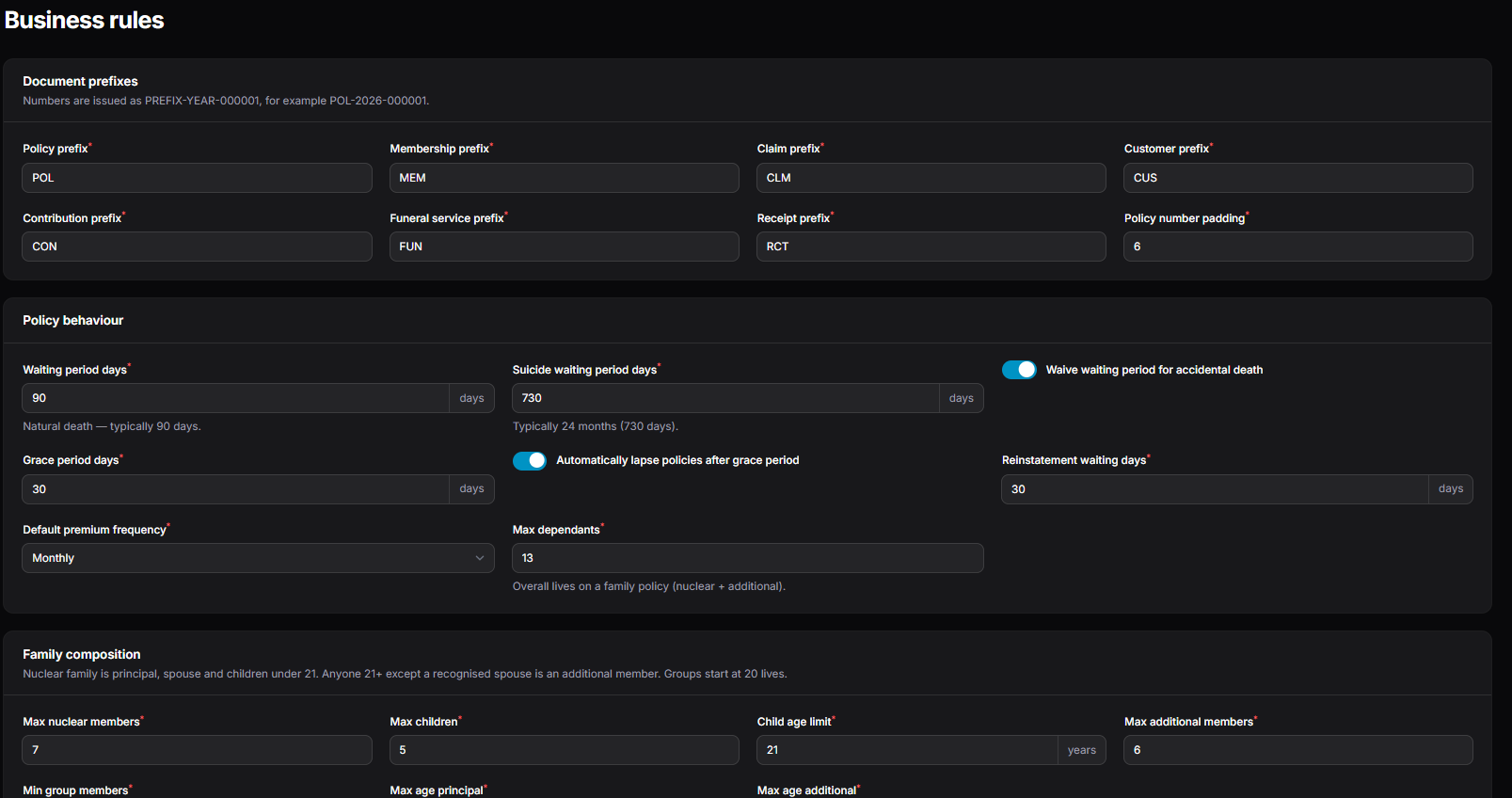
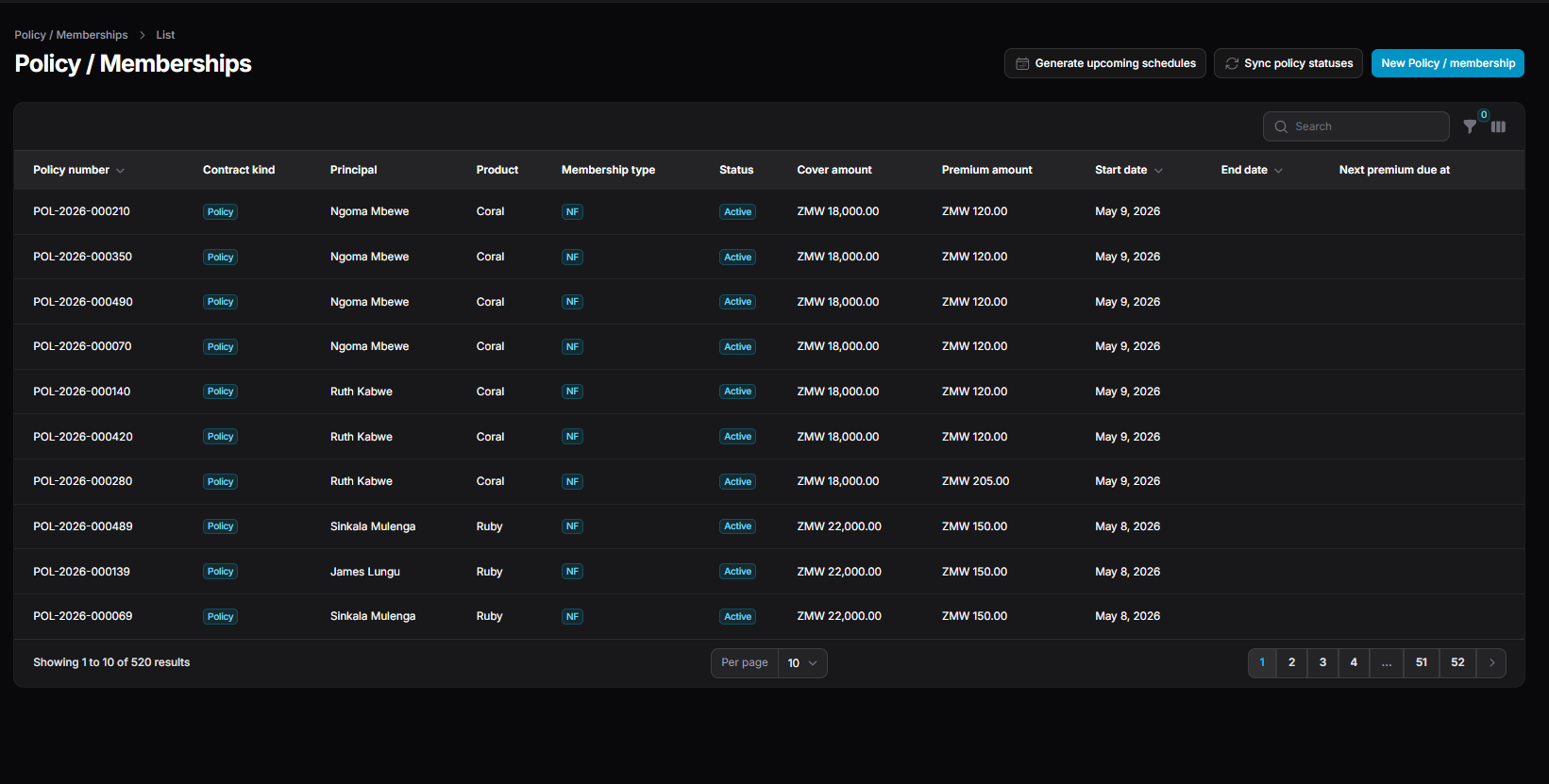
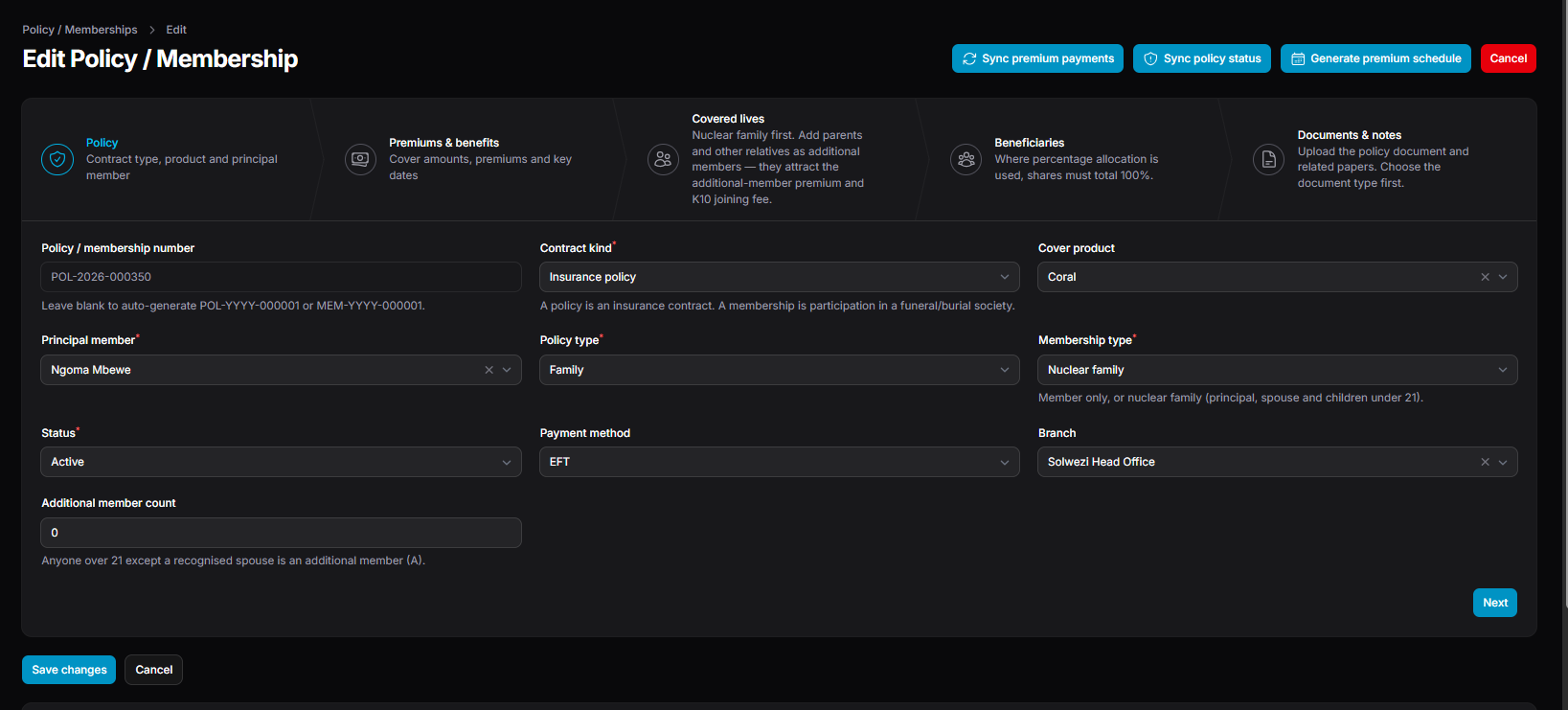
Policy & Membership Administration: It handles the complete lifecycle of funeral insurance policies and society memberships. This includes online policy registration, managing various membership tiers (e.g., individual or family plans), and tracking premium payments. The system enables the automation of tasks like creating debit orders and reconciling payments, often integrating with financial platforms.
Claims Processing: This is a critical function, designed to be efficient and compassionate. The system provides a streamlined workflow for filing, verifying, and processing claims, allowing for quick payouts to cover funeral costs when a member passes away.
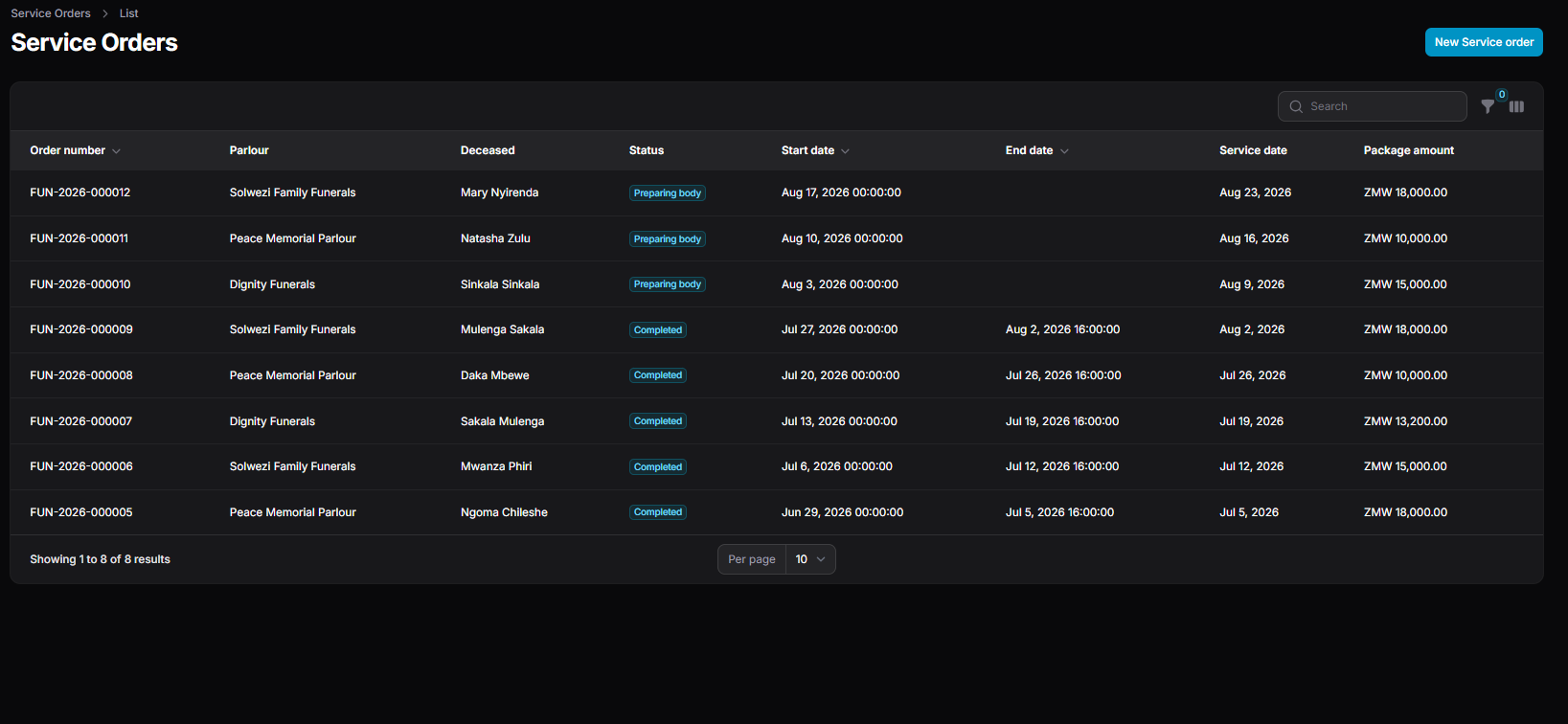
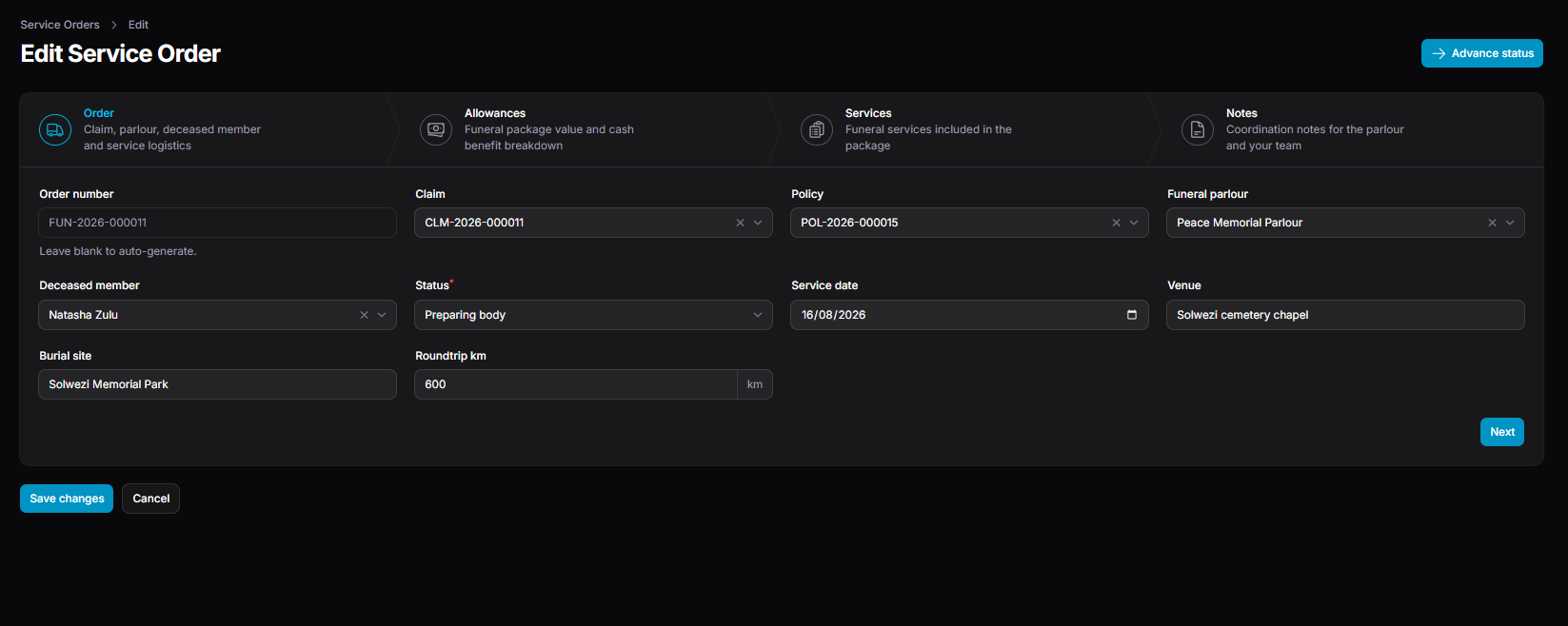
Service & Funeral Arrangement: The platform supports the logistical side of funeral services. It includes tools for managing funerals, from the initial call to the after-care phase. Key features allow users to schedule events (viewing, service, cremation) on a shared timeline, manage venues and staff, and create and manage service-related products like caskets and flowers.
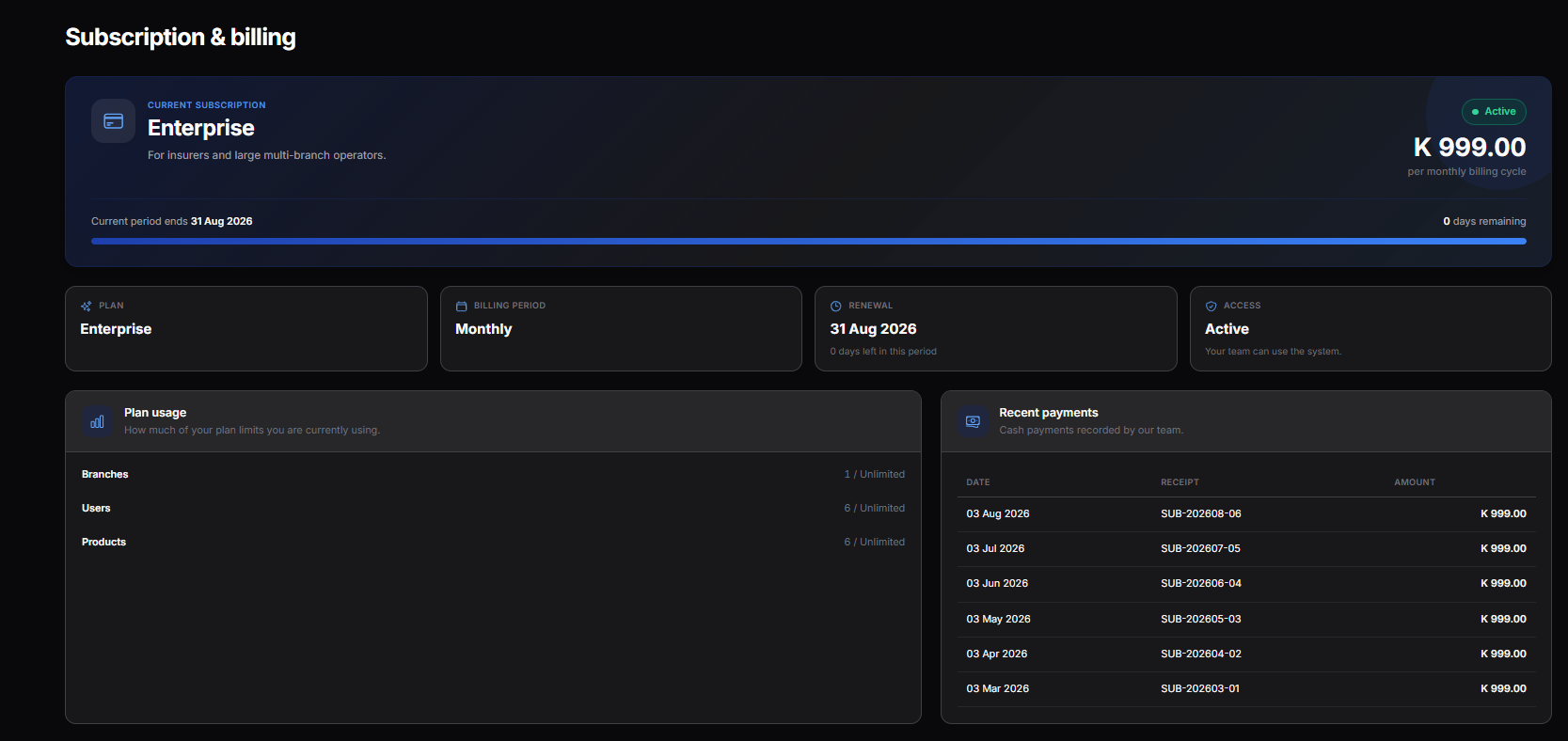
Case Management & Billing: The system creates a central repository for each case, unifying all information related to a decedent's arrangements, contracts, and financials. It automates the creation and management of quotes, invoices, and receipts, ensuring billing accuracy and simplifying financial oversight.
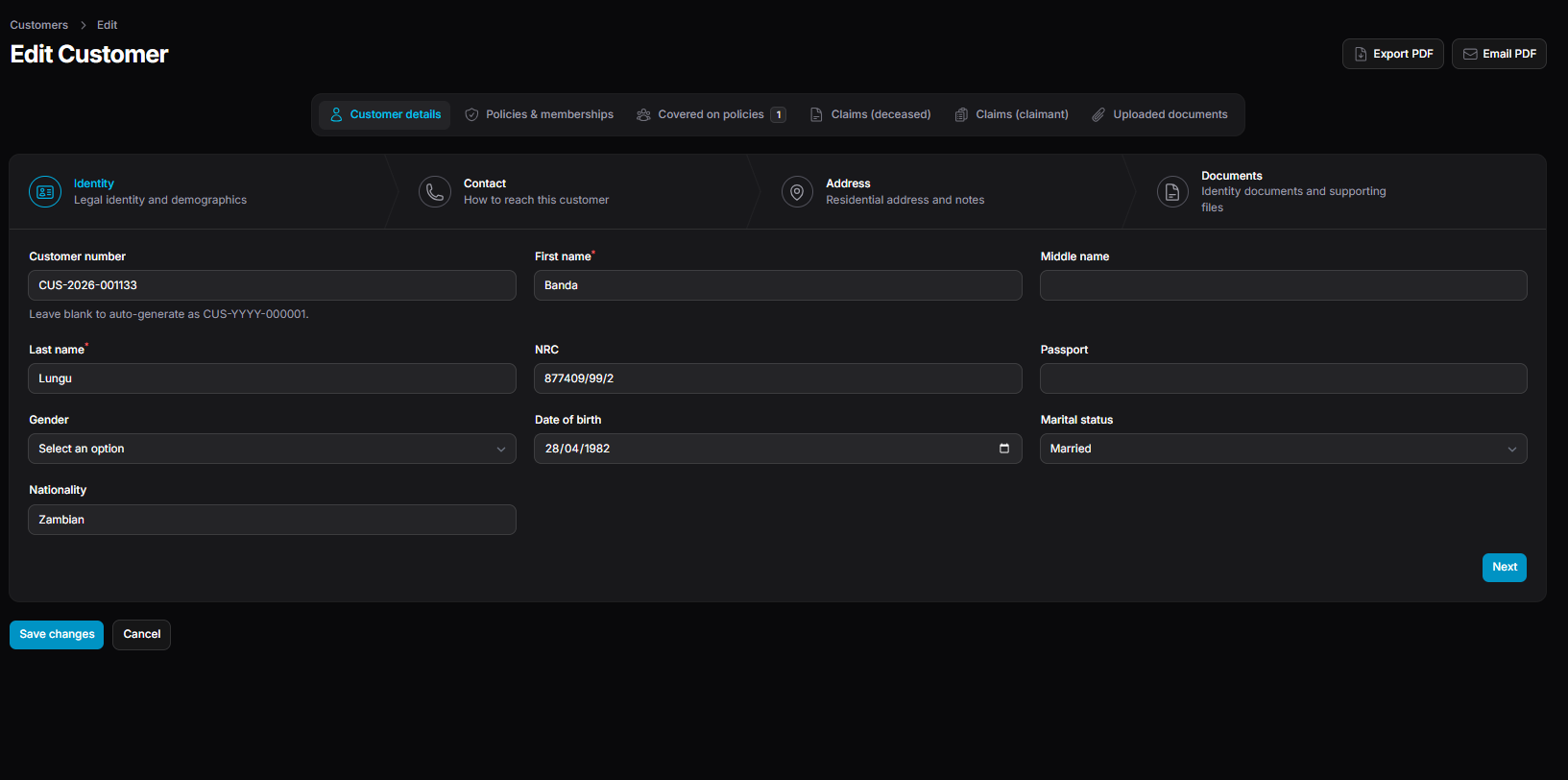
After-Care & Customer Relationship Management (CRM): The relationship with the family continues after the funeral. The system facilitates after-care by managing follow-ups for memorials, anniversaries, and other services. A comprehensive CRM tracks all interactions, ensuring continuity and supporting future client engagement.
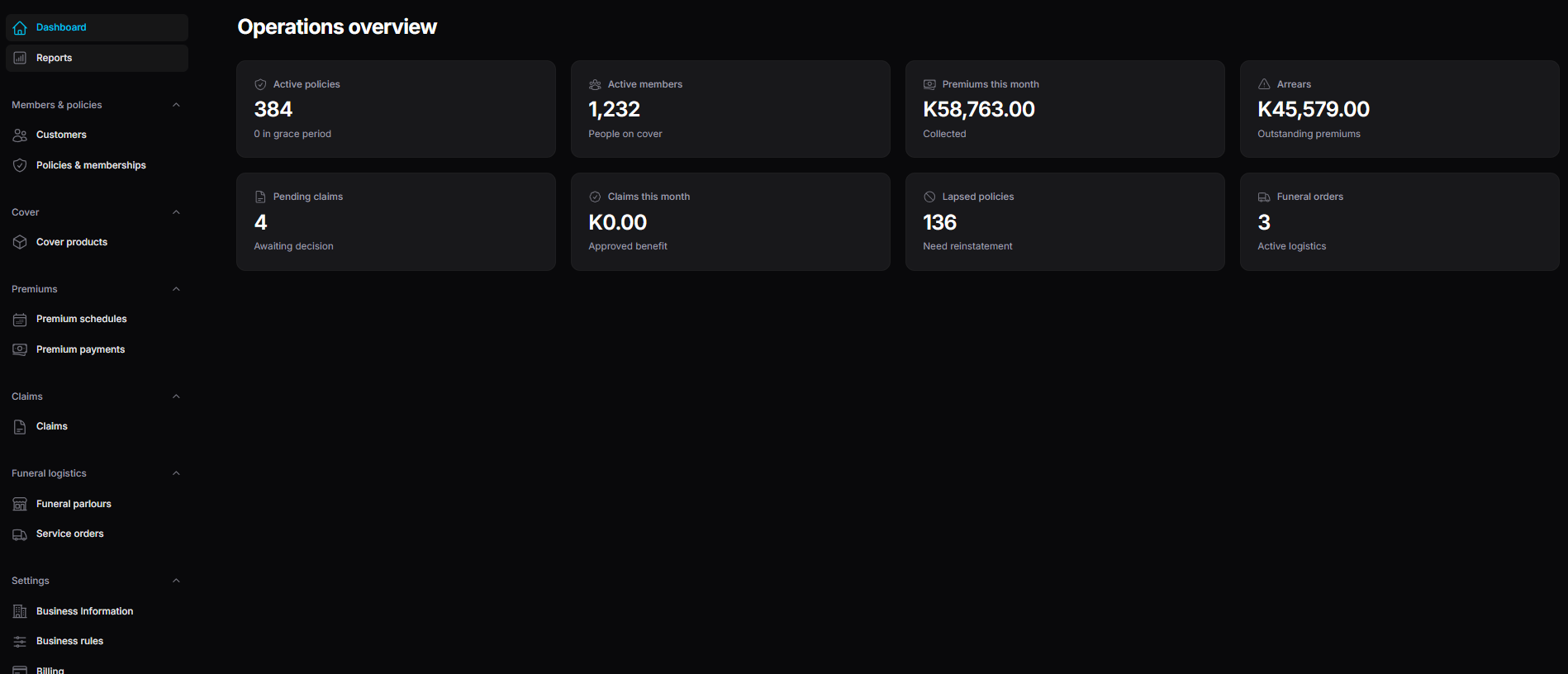
Insights & Reporting: The system provides powerful dashboards and analytics to give administrators a clear picture of business performance. Key metrics like policy uptake, claim frequency, sales, and profitability are automatically aggregated and visualized, aiding in strategic decision-making.
🏗️ Technology & Architecture
Modern solutions in this space are characterized by their cloud-native architecture, API-first design, and robust security practices. Key technological features include:
Cloud-Based & Accessible: Platforms like PlotBox and SFUN are cloud-native, meaning data is accessible from anywhere and the system is easily scalable.
Integrated Ecosystem: They are built to integrate with other essential business tools, such as accounting software, payment gateways, and even communication platforms like WhatsApp, to create a seamless workflow.
Role-Based Access: Security is managed through role-based access control, ensuring that staff, managers, and agents only see the data relevant to their function.
Modern Tech Stacks: Development often uses modern frameworks and languages for robust, scalable performance, such as React and Node.js or Laravel with Livewire.
📌 Key Benefits for Organizations
Implementing such a system brings significant advantages to funeral homes and societies:
Operational Efficiency: Automation of manual tasks like data entry, invoicing, and schedule management saves significant time and reduces errors.
Streamlined Communication: Centralizing case data and using integrated scheduling ensures that all staff, management, and external partners are on the same page, reducing the risk of double-booking and missed tasks.
Enhanced Client Service: By automating administrative burdens, staff can focus more on providing personalized, compassionate care to grieving families during a difficult time.
Data-Driven Decisions: Robust reporting tools transform raw data into actionable insights, allowing management to improve operations, financial planning, and strategic growth.
Project gallery